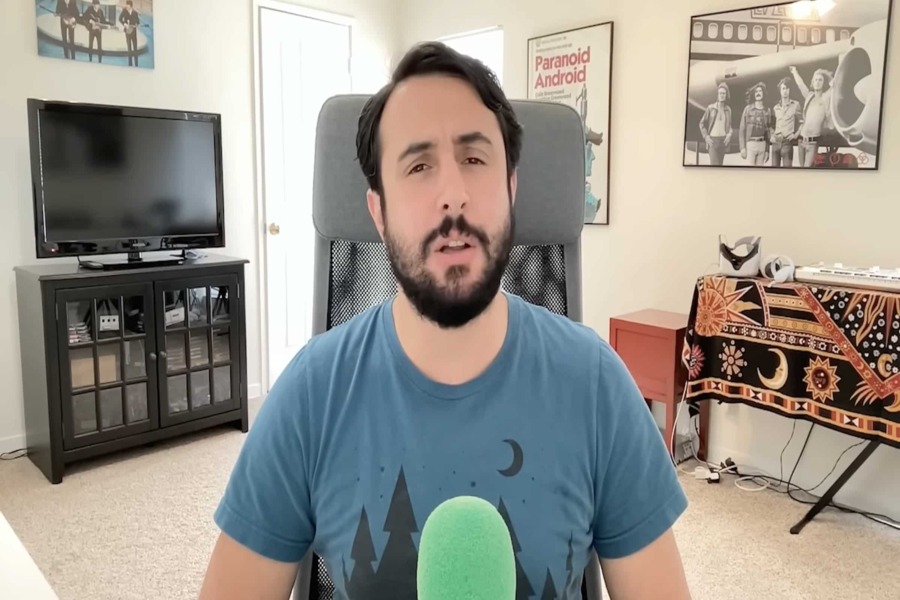
Three years ago, I published a series of four articles (part 1, part 2, part 3, part 4) engaging with Dave Farina who had published a video critique of biochemist Michael Behe’s three books, Darwin’s Black Box, The Edge of Evolution, and Darwin Devolves. Farina, though not holding a terminal degree in any field, is a popular YouTuber, He is a rather sad example of today’s low-quality Darwin defender.
Now, I am no credentialist, and I would not draw attention to Farina’s lack of a terminal degree were it not for the fact that he styles himself as “Professor Dave,” despite neither holding a doctoral degree in any discipline nor having a professorship position. Farina’s lack of an advanced degree does not even by itself form my opinion of his competence in the subjects that he addresses on his channel. As an expert, however, in some of the subjects Farina engages with, it is painfully apparent that Farina lacks expertise on these topics. I am not the only one to have this impression of Farina’s material. I know Jim Tour arrived at a similar conclusion regarding Farina’s interaction with Tour’s own subject matter.
When Farina posted his reply video to my article series, I was distinctly unimpressed by Farina’s handling of the literature he was citing and with his interaction with my written material. His rhetoric was also disproportional to his command of the subject matter. I was therefore disinclined to engage any further with him. Our prior engagement on Twitter also revealed him to be impossible to have a serious scholarly interaction with. For example, he wrote, “Get ready for the top search result for your name on both Google and YouTube being me taking a big steamy dump all over your dumb science denying apologist face.” These are not the words of an intellectually serious person.
Though the errors in Farina’s presentation are easy for the trained eye to spot, not everybody has the academic expertise to identify his many mistakes. Occasionally I have had people ask me for my thoughts on Farina’s critique of me. I have therefore decided that a response to Farina’s video might be instructive for some. In this and subsequent articles, I will address each of Farina’s points from his video.
Farina’s Failure to Acknowledge Mistakes
In my previous article series, I had highlighted multiple items on which Farina is straightforwardly wrong. Rather than engaging with these points or acknowledging correction, Farina chose to simply drop them entirely, focusing instead only on those items which he thought he could rebut. Doubtless many of the viewers of his video will not have bothered to look back on my original article series to see how many of his earlier points Farina subtly drops entirely from his response – points that, as I showed in my previous series, were straightforwardly wrong.
Perhaps the most significant howler in Farina’s previous video, which he entirely dropped in his rebuttal, is Farina’s mistaken claim that scientists observed a flagellum evolve in real-time. Behe had asked in a 2016 article,
[W]hy doesn’t [Kenneth Miller] just take an appropriate bacterial species, knock out the genes for its flagellum, place the bacterium under selective pressure (for mobility, say), and experimentally produce a flagellum — or any equally complex system — in the laboratory? (A flagellum, after all, has only 30-40 genes, not the hundreds Miller claims would be easy for natural selection to rapidly redesign.) If he did that, my claims would be utterly falsified. But he won’t even try it because he is grossly exaggerating the prospects of success.
Farina commented,
Hilariously, [Behe] is oblivious to the fact that this precise experiment was carried out the year before. Here’s the paper. Gene deletion produced two strains of bacteria with no flagellum. They then introduced selective pressure for motility by depleting the nutrients in the colony. Within 96 hours, both strains had regenerated flagellar motility by a pathway involving two successive point mutations in genes that served other purposes.
As I noted in my original article addressing Farina, the paper that Farina cites does not do this at all. [1] I stated in my earlier essay that I am skeptical that Farina even took the time to read the article, beyond the title, before citing it. Farina has done nothing with his more recent rebuttal to assuage these concerns. All that the researchers deleted was the flagellar master switch protein, FleQ, in Pseudomonas fluorescens. After a few days of incubating the bacterial cells on Petri dishes, they reacquired their ability to grow flagella. The genetic basis for this reactivation of the flagella is that another master switch protein, NtrC, that is a structurally similar homolog of FleQ — responsible for turning on genes involved in nitrogen metabolism — already had the ability, to some extent, to cross-bind to the promoter usually bound by FleQ. When produced in excess, as a result of a broken regulator, NtrC was thus able to drive flagellar synthesis. As a consequence of this mutation, the bacterial cell lost its ability to regulate its nitrogen metabolism genes.
Thus, contrary to the Farina video’s claims, this paper does not document the de novo evolutionary origins of a bacterial flagellum at all — far from it. In fact, Behe has already addressed the paper here. Once again, Farina failed to address or even mention these points in his more recent video where he is supposedly responding to my rebuttal. He just dropped this example and refused to admit that he was completely wrong.
Another significant error that Farina dropped entirely relates to the malarial parasite. In particular, Farina had previously stated that “it’s quite amusing to note that if Behe considers [antimalarial] drug resistance to be impossible to evolve, it means that he believes in a god who deliberately bestowed plasmodia with resistance to our drugs in order to ensure that we continue to contract malaria. Gee, what a swell guy.” As I wrote in my previous essay addressing this aspect of Farina’s critique of Behe, though, this betrays a misunderstanding of what Behe argues in The Edge of Evolution. He does not deny that malarial parasites have acquired resistance to chloroquine and other antimalarial drugs. Quite the contrary. Rather, he notes that malarial resistance to chloroquine has arisen and that it occurs approximately once in every 1020 cells. He then uses this data to extrapolate to a case requiring twice as many co-dependent changes to bring about, and he points out that this problem is far more acute in the case of more complex organisms like large mammals, with much smaller population sizes, longer generation turn-over times, and lower mutation rates. Casey Luskin called out Nathan Lents who made the exact same error about Behe, and Farina seems to have basically mimicked Lents’s total error in full. This is a straightforward error on Farina’s part, and Farina fails to even acknowledge it.
Another example which Farina quietly dropped in his rebuttal, though this one is more of an error of interpretation rather than of fact, is his claim that there are animals that consume photosynthetic algae “which appear to be on their way to becoming photosynthetic themselves via endosymbiosis.” In support of this contention, Farina cited a paper on “Horizontal gene transfer of the algal nuclear gene psbO to the photosynthetic sea slug Elysia chlorotica.” [2] As I noted in my original response, the paper discusses the acquisition of plastids by the sea slug Elysia chlorotica by ingestion of the photosynthetic algae Vaucheria litorea. Though more than 90 percent of the proteins required for plastid metabolism are encoded in the nuclear genome of the algae, the plastids are nonetheless still able to photosynthesize within the sea slug. The paper determines that the essential plastid proteins are supplied by the sea slug itself, and that the genes which support photosynthesis have been acquired through horizontal gene transfer. But this does not involve the evolution of any new complex traits. The genes and proteins already existed but were simply transferred from one organism to another. Farina did not revisit this example in his response video.
A further claim Farina failed to revisit is his statement in his previous video that “There are the unicellular algae that evolved in the lab to become permanently multicellular,” citing a paper by Herron et al. (2018) — “De novo origins of multicellularity in response to predation.” [3] In the study, populations of the unicellular green alga Chlamydomonas reinhardtii were subjected to selective pressure by the introduction of the filter-feeding predator Paramecium tetraurelia. They found that two of the five populations developed multicellular structures. However, the multicellular populations lacked motility and the multicellular structures did not evolve multiple cell types. Moreover, as the authors of the paper note, “The ability of wild-type C. reinhardtii to form palmelloids [i.e. multicellular structures] suggests that the founding population in our experiment already possessed a toolkit for producing multicellular structures.” While the strains that evolved in the experiment are obligately multicellular (meaning that being composed of multiple cells is an essential and permanent part of their life cycle), the authors suggest that the genetic basis of the evolved multicellularity phenotype “involves the co-option of a previously existing plastic response.” If this is the case, the authors note, “the shift from a primarily unicellular (but facultatively multicellular) to an obligately multicellular life cycle may have required only a change from facultative to obligate expression of the genes involved in palmelloid formation.” In other words, the transition from being able to exist as single-celled organisms, while forming multicellular structures under certain conditions, to being permanently multicellular may have involved a shift from being able to turn the relevant genes on or off to the genes being permanently locked on. In essence, at best this cannot be an example of evolving something new, but simply an example of a pre-existing trait being turned on permanently. Nothing new actually evolved.
Failing to acknowledge mistakes when they are pointed out to you is one of the surest signs of “soldier mindset” – a mindset more concerned with defending one’s side than with arriving at the truth and refining one’s map of reality. A true scout mindset, by contrast, invites the correction of errors, because truth takes precedence over preserving appearances of scoring rhetorical points.
Revisiting the Lenski Experiment
Farina offers the Lenski experiment as a purported counter-example to irreducible complexity (see my previous article engaging this topic). In Richard Lenski’s long-term evolution experiment (LTEE) with Escherichia coli, it was famously observed that, following some 33,000 generations (15 years), bacterial cells evolved the ability to grow on citrate under aerobic conditions. The genetic basis for this is that E. coli already possesses the ability to grow on citrate under anaerobic conditions, facilitated by a citrate transporter protein encoded by the gene citT. A 2933 base pair stretch of DNA, containing the citT gene, underwent duplication. The result was that a copy of the hitherto unexpressed citT gene was placed under the control of the promoter of the adjacent gene, rnk, which as a consequence drove expression under aerobic conditions.
Farina contends that,
A particular strain evolved an attribute that qualifies as irreducibly complex according to Behe’s own definition… This experiment produced a strain of bacteria that was able to digest citrate in an aerobic environment, and in order to do this it required multiple mutations in both the dctA gene and citT gene, and a duplication of the citT gene into a new region of the genome. All of these changes were required, and none of them can have been selected for individually. In fact, the critical duplication is actually deleterious on its own without the other mutations. So according to Behe’s own definition, it is irreducibly complex, yet we watched it evolve.
While multiple changes are required for the efficient Cit+ trait, biologist Scott Minnich and colleagues showed that the process is stepwise, conferring a selective advantage at each stage. An initial weak benefit is realized by amplification of citT via gene duplication. This allows limited citrate uptake during aerobic conditions. Aerobic expression of citT is then strongly activated by promoter capture, yielding a functional Cit+ phenotype. Subsequent refinement of the dctA gene yields a further advantage by bringing succinate back into the cell that was leaking out. Farina’s claim that “none can have been selected individually” is factually incorrect.
Misapplying Irreducible Complexity
Farina also misapplies biochemist Michael Behe’s definition of irreducible complexity. According to Behe, “By irreducibly complex I mean a single system composed of several well-matched, interacting parts that contribute to the basic function, wherein the removal of any one of the parts causes the system to effectively cease functioning.” [4] In such a system, no stepwise paths exist in which each intermediate stage confers a selective benefit. This standard is not met by the Cit+ trait. As shown in the Minnich paper, each stage confers a selective advantage. Moreover, the Minnich paper explicitly states that “No new genetic information (novel gene function) evolved.” This is merely an example of repurposing pre-existing transporters, not the origins of a novel irreducibly complex system.
Farina continues,
How is Jonny gonna deal with this one? Surprise, surprise, he lies. He pretends that the only change was duplication of the citT gene. A ‘relatively simple change that does not require multiple co-dependent mutations to bring it about’. Except it does, Jonny.
No, I did not assert that “the only change was a duplication of the citT gene.” In fact, I specifically noted that “the ability of the cells to grow on citrate under aerobic conditions was optimized by several other mutations.” The key point of the Minnich paper, however, was that this adaptation does not require a series of prerequisite neutral mutations as Lenski and his colleagues had assumed.
Misunderstanding the Minnich Paper
Farina continues,
The first paper that demonstrated the complexity of the Cit+ trait was “A case study in evolutionary contingency” by Zachary Blount, published in 2016, which showed that additional mutations occurred in the history of the Cit+ line that allowed the Cit+ trait to actually occur. But ironically, as we mentioned in the Behe debunk, a lot of the details of the Cit+ trait were fleshed out in another 2016 paper, called ‘Rapid Evolution of Citrate Utilization by Escherichia coli by Direct Selection Requires citT and dctA’, co-authored by one of Jonny’s DI colleagues, Scott Minnich. In this paper, Minnich and his co-authors identified a set of specific mutations that are necessary for the Cit+ trait to evolve. Minnich and other DI hacks tout this study to try and undercut the weight of what the LTEE demonstrated, claiming ‘Hey, it’s actually really easy to evolve Cit+ under the right conditions, so it’s no big deal!’, when what they’ve actually done is show just how readily irreducibly complex traits can evolve, completely demolishing the biggest argument in their pathetic arsenal.
Farina’s representation of the Minnich paper is extremely misleading. The whole point of the Minnich paper is that the LTEE result was an artifact of experimental conditions rather than a rare event. The prior neutral mutations are not necessary for potentiation – the only requirement is citT amplification. As Minnich and his colleagues showed, this can happen in as few as twelve generations.
Farina further writes,
He [McLatchie] even references the Minnich paper only to completely contradict himself, outright stating that three steps were highlighted, the first involving neutral mutations which are necessary for the later actualization event.
That’s how confident he is that nobody reading has a clue what he’s talking about.
The self-contradiction is blatant. So when you pretend that it was just a duplication of the citT gene and nothing else, that’s called a lie. You know, those things that liars tell? You’re a liar, Jonny.
But it is Farina, not me, who is mistaken. I did not claim that “nothing else” happened (in fact, I said the opposite). When I discussed the three steps of potentiation, actualization, and refinement, this was specifically in the context of describing Lenski’s original interpretation. Lenski’s group believed that as many as 33,000 generations were required for the trait to evolve due to the need for the rare prior neutral mutations (i.e., the potentiation step). The Minnich paper argued, contrary to this interpretation, the prior potentiating mutations are not required. Rather, gene amplification, via duplication, of the citT gene yields a benefit immediately, without preceding contingent mutations.
We now turn our attention to Farina’s discussion of the Vpu protein in HIV-1 as a counter-example to Behe’s thesis in The Edge of Evolution.
On Vpu
Farina remarks,
Another example I mentioned in the Behe debunk is the VPU protein in HIV-1. It evolved the ability to counteract part of the human immune system that’s different from other apes, a completely new function, without losing its ancestral function.
Farina’s representation of this example is factually accurate. However, this adaptation was achieved through minor modification of an existing viral protein (specifically, changes to the transmembrane domain) rather than de novo creation of a new protein. As I noted in my previous article addressing Farina, Vigan & Neil mapped the key changes to specific residues (in particular, A14, W22, and to a lesser extent A18) in the transmembrane domain. These residues cluster on one face of the alpha helix and are crucial for tetherin interaction and antagonism. Farina responds,
Jonny attempts damage control here too. First he references a completely different paper which investigates only one region of the protein, instead of the paper I referenced which investigates two regions, specifying that adaptations in both of these regions are required for the novel activity. The paper Jonny pivoted to examines only one of these. Creationist cherry picking at its finest.
However, while changes in both segments of the transmembrane domain do contribute to optimal function, the strongest effects come from the central cluster (especially A14 and W22). Mutations affecting the N-terminal segment have weaker effects and mostly contribute to efficiency rather than being strictly critical. Indeed, beyond the three amino acid modifications I referred to in my previous article (and above), no other residue changes are required for the core tetherin-antagonism function of HIV-1 Vpu.
Farina further comments,
It’s also worth noting that another study looking at a different HIV subgroup, HIV-1N, showed four amino acid substitutions that activated VPU against human tetherin, which are totally different from the ones in the study on HIV-1M. So this example also debunks another classic creationist straw man, the idea that there is only one way to get a particular function. Two different sets of mutations yielding the same novel function in two different subgroups of the virus. Isn’t it lovely when one example debunks two creationist talking points at the same time?
It is true that having multiple combinations that achieve a complex adaptation increases the probability of finding one of them by chance. However, as the number of required co-dependent mutations for a selective benefit to be realized, the probability that there are alternative combinations decreases.
Consider that, for a two-residue interaction, the number of possibilities is 202, or 400. For a 3-residue interaction, the number jumps to 203, or eight thousand. For a 4-residue interaction, the combinatorial space is as high as 204, or 160,000. For a 5-residue interaction, the number of possibilities is 205, or 3.2 million. Unless the number of solutions grows proportionally, the fraction of adaptive combinations drops dramatically.
Farina further states,
After that Jonny decides to whine about how none of it matters and this example doesn’t count, because it’s in viruses which mutate so rapidly. No fair! Ok then, moron.
Farina’s dismissal of this important point suggests that he does not understand the subject of population genetics very well. Viruses such as HIV have enormous effective population sizes, very high mutation rates, and extremely short generation turn-over times. These render multi-mutation effects vastly more probable than in bacteria, let alone multicellular organisms such as animals. If complex adaptations can happen anywhere, they are most likely to occur in viruses. Even this particular case is not especially impressive given the highly optimal conditions for viral evolution relative to higher life-forms.
Has Dave Farina Refuted Behe & Me on the Bacterial Flagellum?
As I noted earlier in this article, Farina had previously claimed that scientists had observed a flagellum evolve in real-time. I documented in a previous article (the one to which Farina is supposedly responding) that Farina had completely misinterpreted the paper. Rather than acknowledge correction, however, Farina chose to entirely drop this point in his most recent response.
In any case, let us review what Farina did in fact say in response to other aspects of my critique.
Is Machine Language Used in the Technical Literature?
Farina remarks,
Let’s move on to part two, which is about the bacterial flagellum, the honorary mascot of intelligent design. He starts by whining about how I identified the persistent tactic of using terminology related to man-made machines to describe biological systems, to manipulate the viewer into believing these systems were designed. Predictably, Jonny says that everyone talks like this!
This is not a “persistent tactic” intended “to manipulate the viewer into believing these systems were designed.” The use of machine language to describe biological systems is standard in the scientific literature. Farina alleges that,
“People who aren’t pushing propaganda typically refer to these structures by saying ‘acts as a drive shaft’, or ‘molecular “clutch”’ using quotation marks, to distinguish from a literal clutch. The functions are analogous. There have been numerous papers written to push back against this analogy of cells as machines…”
To take but a single example, one paper is titled “Structural basis of the bacterial flagellar motor rotational switching.” [5] Here, the term “motor” is used without qualification or quote marks. The same paper states that “The motor is a bidirectional rotary nanomachine” and “the hook functions as a joint that connects the motor to the filament, which acts as a propeller to propel bacteria for swimming in liquid medium and swarming on solid surface. The motor spans both the inner and outer membranes, and consists of the basal body and several stator units.” Moreover, “The LP ring acts as a bushing to stabilize the rotation of the rod, which serves as the drive shaft.” Examples of such language in the literature could be multiplied almost endlessly. That Farina is not aware of this indicates his lack of familiarity with the scientific literature.
In Defense of Behe & Snoke
Farina continues,
But here’s the big whiff for this one. I had taken Behe to school for a paper he wrote with David Snoke where he pretended that his simulation demonstrated the improbability of irreducibly complex traits arising. Here’s Jonny’s response: ‘“Finally, Farina complains that ‘They also specified a pre-determined target sequence and only considered the simulation to have been successful if that specific target evolved.’ But this is incorrect. Rather, the paper provides estimates for how many organisms would be required, and over how long a time frame, for multiple co-dependent mutations (none of which by themselves confers an advantage) to become fixed in a population.’ See what he does there? He states the critique, and then says something completely irrelevant. His response does not in any way address the critique.
But Behe and Snoke’s simulation does not assume a single magic sequence. Rather, it estimates the time required for the fixation of coordinated changes, where neither of the mutations by itself confers an adaptive advantage. Farina continues,
“That does not refute what I said. It is objectively true that Behe and Snoke specified a target sequence, something that Jonny doesn’t even try to dispute, and that alone invalidates their conclusion, since evolution does not work that way. There are no predetermined goal sequences. Nature is not sentient.”
The point of the paper, though, is to evaluate the time needed to evolve a new functional interaction that requires multiple specific mutations in multicellular organisms.
Farina goes on,
We have directly, experimentally demonstrated that there are usually many sequences that will do a specific job approximately equally well. For example, a 2018 study found that among random strings of 100 nucleotides, many will function as a promoter in E. coli, some equally as well, or even better than, the wild-type sequence. So setting a predetermined target to determine how fast or slow, or how likely or unlikely something is to evolve completely invalidates whatever conclusion you reach, period.
This is an extremely weak argument, and it’s not applicable to Behe and Snoke’s paper. First, they specifically looked at evolution in multicellular organisms, not bacteria. So any examples from E. coli bacteria don’t address the paper’s arguments.. Second, promoters are relatively simple sequences that recruit RNA polymerase and basic transcription factors. They are short and many different sequences can do the job. A functional promoter is relatively easy to find in sequence space. On the other hand, protein-protein binding interfaces require highly specific and complementary shapes. A random DNA sequence is far more likely to weakly promote transcription than two proteins are to randomly evolve a new binding interface.
Shifting Fitness Landscapes
Farina comments,
Moving on to number three, we go from Behe’s first garbage book, Darwin’s Black Box, to his second garbage book, The Edge of Evolution, and Jonny doesn’t do any better here. Remember that tactic from a minute ago, where he just repeats the critique, and then follows it with something completely unrelated? He does that again here. He quotes my explanation for how Behe butchers the concept of fitness landscapes, and then responds with this: ‘But for many complex adaptations, such as those described in Behe’s books, a fitness benefit is not realized until multiple co-dependent mutations have arisen.
That is exactly what both Behe and Jonny get wrong about this. That sentence is only true if the fitness landscape doesn’t change.
While Farina’s point about shifting fitness landscapes is valid when discussing changing environments (what is disadvantageous in one environment, might be beneficial in another), it does not refute Behe’s argument. Of course, fitness landscapes can change. However, for many complex features, adaptations require multiple coordinated mutations, even in dynamic environments. Farina essentially admits this when he argues that there were multiple neutral potentiating mutations required to evolve the Cit+ phenotype. He was wrong in that case to claim that the potentiating mutations were required for the Cit+ trait, but the point is Farina knows that there can be cases where multiple mutations are necessary before you gain any advantage. Thus, even Farina knows that Behe’s framing is not invalid.
Farina states,
For example, if a mutation makes an enzyme less stable, then it may become compatible with different substrates, since its structure will be more flexible. In an environment with only one target molecule, this would then be harmful. But if a second target becomes available, meaning if the fitness landscape changes, then that mutation may be beneficial under the new conditions. Pretty easy to grasp, huh? Just a quick reminder, Jonny has a doctorate in evolutionary biology. There’s no way he doesn’t understand this. He’s shilling for the DI for cash.
But in order for a complex feature that requires multiple specific co-dependent mutations, the landscape must change in precisely the right way at the right time – after the realization of the first mutation but before it is lost to genetic drift or purifying selection. And the same thing must happen again after the second mutation. And so on.
Vpu Revisited
In my original article, I had noted that Farina cited the Vpu example as a counter-example to Behe’s claim concerning HIV that “there have been no significant basic biological changes in the virus at all” and “there have been no reports of new viral protein-protein interactions developing in an infected cell due to mutations in HIV proteins.” As Behe acknowledged years ago, this was in fact one example he had previously overlooked. I noted that this does not significantly impact Behe’s central thesis, since one may modify the statement to assert that “There have been hardly any reports…” Farina responds, “It’s actually pretty great that he admits this, because the difference between ‘none’ and ‘hardly any’ is the difference between Behe being right and Behe being full of shit.”
To my knowledge, this is the only instance that may be cited as a counter-example to Behe’s claim (if Farina or anyone else knows of another counter-example, then I would be interested to see it). This is particularly striking given how extensively studied and well characterized the HIV virus is. Since the 1980s, tens of thousands of scientific papers have been published on the HIV virus, and hundreds of thousands of HIV genomes have been sequenced from patients globally. If evolution is capable of producing complex molecular interactions, the place where we would most expect to find them is in viruses like HIV, with their massive population sizes, fast mutation rates, and rapid generation time. If it is difficult even in HIV to evolve a new protein-protein binding site, all the more is it a problem when it comes to bacteria and simple eukaryotes, let alone more complex organisms like mammals!
Dave Farina Misunderstands Darwin Devolves
In this final section, I will engage with Farina’s comments regarding my defense of Behe’s most recent book, Darwin Devolves.
Farina remarks,
Finally we get to the fourth one, which is about Behe’s third and arguably dumbest book, Darwin Devolves. This is the one that botches super basic concepts in genetics so badly that it becomes painfully obvious that Behe is lying… the entire book is based on the singular insane lie that mutations ‘degrade information’ in the genome and are somehow destructive. Of course this is meaningless, and simply meant to take advantage of people who have no idea what mutation means or even what DNA is.
This is a caricature of Behe’s thesis. Behe does not claim that all mutations are harmful to the organism. Indeed, most mutations are in fact neutral, a point Behe happily acknowledges in his book (see for example pp. 96-98 of Darwin Devolves where Behe states “neutral mutations are the bulk of changes at the molecular level” [6]). Rather, Behe’s thesis is that beneficial mutations (which accounts for a small minority of all mutations) are heavily biased toward loss-of-function – that is, degradation of existing genetic information. This thesis is not just correct, but supported by extensive data from population genetics. There are vastly more ways to gain an advantage by breaking functional genetic elements than there are ways to gain an advantage by building a new, complex feature. Therefore, natural selection will always “find” the destructive, but beneficial, mutations (of which there are many more in number) long before it “finds” the constructive beneficial mutations (which are far rarer). This presents a formidable challenge to the idea that complex organisms have arisen from a simple single-celled progenitor, via entirely unguided processes.
Farina continues,
Even with simple point mutations, which don’t ‘degrade’ anything, they just potentially alter the products of gene expression, the results are varied. But more importantly, there are large scale mutations that I mentioned in the Behe debunk, like gene duplication and neofunctionalization, as well as de novo genes, which produce completely new proteins without losing any genetic material or existing functionality. Every biology undergraduate student in the world knows this.
Nobody in this debate is denying that constructive mutations, gene duplications and de novo (i.e., taxonomically-restricted) genes exist. Rather, Behe’s argument in Darwin Devolves is that beneficial mutations are heavily biased towards degradation or loss-of-function. This is an empirical fact. There are vastly more ways to acquire an advantage by breaking a gene than there are to do so by building a genuinely new function. The implication of this fact must not be lost: blind evolution via random mutation and natural selection will tend to break or diminish functions at a much faster rate than it builds them. This means Darwinism faces a fundamental problem. A majority of gene duplications are lost to purifying selection or become pseudogenes. Successful neofunctionalization depends on a series of specific mutations that confer novel selectable function while preserving the original copy. In bacteria in particular, there is a significant time limit for neofunctionalization to occur since there is an energetic cost in carrying and transcribing a broken gene. [7,8]
In the case of de novo genes, their envisaged origin from non-coding DNA is typically assumed rather than demonstrated. Requirements for this to work include a functional open reading frame, a promoter, proper level and timing of expression, correct protein folding, and integration into existing cellular networks.
Citing mechanisms known to every undergraduate does not address the quantitative data, emphasized by Behe and others, on the rarity of constructive change relative to degradative change.
Farina goes on,
Let’s see how little Jonny tries to play it off. First, he tries to cover up the fact that Behe himself provided a counter-example to his own thesis with the C-Harlem variant of hemoglobin, and this mess is how he tries to do that: ‘Surprisingly, however, ‘the C-Harlem gene, which builds directly on the foundation of the sickle gene and would entirely eliminate the drawbacks of the sickle mutation, has not yet turned up in Africa, where it would do the most good.’ The reason for this is that the move from regular hemoglobin to C-Harlem would require two co-dependent mutations, whereas the sickle-cell trait requires only one.’
Again, we see Jonny’s strategy of ‘ignore the critique and say something unrelated’, which almost always turns out to be some variant of ‘but it’s really unlikely!’.
That doesn’t matter. Behe’s whole argument is based on the idea that non-reductive beneficial traits never evolve. But here we have an example of such a trait that he himself described in his book.
How frequently we expect it to evolve is completely irrelevant to the question of whether it exists.
And if we want to take this non-response seriously, it clearly evolved at least once, since we’ve documented its existence. Then he whines about Cit+ again, and says literally nothing.
Again, Farina is repeating a strawman. Behe does not claim that no constructive traits evolve. Rather, the claim is that beneficial mutations are biased in favor of degradative changes rather than constructive ones. Farina did not address my remarks on C-Harlem from the previous article – the article he is supposed to be responding to. So, I shall simply repeat what I wrote there.
The C-Harlem example actually supports Behe over Farina. As Behe explains in The Edge of Evolution, “Hereditary persistence of fetal hemoglobin (HPFH) is already widespread in Africa, ameliorating the problems of the sickle gene.” [9] Surprisingly, however, “the C-Harlem gene, which builds directly on the foundation of the sickle gene and would entirely eliminate the drawbacks of the sickle mutation, has not yet turned up in Africa, where it would do the most good.” [10] The reason for this is that the move from regular hemoglobin to C-Harlem would require two co-dependent mutations, whereas the sickle-cell trait requires only one. The probability of getting the sickle-celled trait in any individual is about one in a hundred million. Assuming a population size of a million people, it should thus be expected to arise spontaneously approximately every hundred generations, which is within the reach of evolutionary processes. For the two necessary mutations needed for hemoglobin C-Harlem to occur at the same time, the probability is a hundred million multiplied by a hundred million, which is 1016. As Behe summarizes, “With a generation time of ten years and an average population size of a million people, on average it should take about a hundred billion years for that particular mutation to arise — more than the age of the universe.” [11] Nonetheless, hemoglobin C-Harlem has arisen, and was first documented relatively recently in New York City. [12] But this is because the initial sickle-cell trait was already adaptive, since it conferred resistance to the malarial parasite. Thus, natural selection can preserve the sickle-celled trait (requiring only a single mutation) first and then acquire the second mutation (building on the first), thereby giving rise to the C-Harlem trait, which confers an even greater advantage. The C-Harlem example, therefore, in fact supports Behe’s thesis rather than Farina’s.
A Disappointing Showing from Farina
Farina’s video response to my previous article series is characterized by misrepresentations of the literature he is citing, selective engagement with my own points, and reliance on insults and name-calling. He repeatedly and quietly drops major points on which he was shown to be incorrect.
Neither Behe, nor I, have denied the ability of evolution to produce small-scale adaptations, regulatory changes, or even occasional constructive mutations. Rather, we contend that there are definable limits to what the theory of evolution can accomplish. In particular, we would contend (and this is the main thesis of Behe’s book, Darwin Devolves) that most beneficial mutations involve degradation of existing information and that complex, integrated molecular systems can only be brought about by coordinated changes that exhaust the probabilistic resources afforded by population genetics.
Footnotes
1. Taylor TB, Mulley G, Dills AH, Alsohim AS, McGuffin LJ, Studholme DJ, Silby MW, Brockhurst MA, Johnson LJ, Jackson RW. Evolution. Evolutionary resurrection of flagellar motility via rewiring of the nitrogen regulation system. Science. 2015 Feb 27;347(6225):1014-7. doi: 10.1126/science.1259145. PMID: 25722415.
2. Rumpho ME, Worful JM, Lee J, Kannan K, Tyler MS, Bhattacharya D, Moustafa A, Manhart JR. Horizontal gene transfer of the algal nuclear gene psbO to the photosynthetic sea slug Elysia chlorotica. Proc Natl Acad Sci U S A. 2008 Nov 18;105(46):17867-71. doi: 10.1073/pnas.0804968105. Epub 2008 Nov 11. PMID: 19004808; PMCID: PMC2584685.
3. Herron MD, Borin JM, Boswell JC, Walker J, Chen IK, Knox CA, Boyd M, Rosenzweig F, Ratcliff WC. De novo origins of multicellularity in response to predation. Sci Rep. 2019 Feb 20;9(1):2328. doi: 10.1038/s41598-019-39558-8. PMID: 30787483; PMCID: PMC6382799.
4. Behe MJ.. Darwin’s Black Box: The Biochemical Challenge to Evolution . Simon & Schuster UK. Kindle Edition.
5. Tan J, Zhang L, Zhou X, Han S, Zhou Y, Zhu Y. Structural basis of the bacterial flagellar motor rotational switching. Cell Res. 2024 Nov;34(11):788-801. doi: 10.1038/s41422-024-01017-z. Epub 2024 Aug 23. PMID: 39179739; PMCID: PMC11528121.
6. Behe, MJ. Darwin Devolves: The New Science About DNA That Challenges Evolution (p. 98). HarperCollins. Kindle Edition.
7. Kuo CH, Ochman H. The extinction dynamics of bacterial pseudogenes. PLoS Genet. 2010 Aug 5;6(8):e1001050. doi: 10.1371/journal.pgen.1001050. PMID: 20700439; PMCID: PMC2916853.
8. Gauger AK, Ebnet S, Fahey PF, Seelke R (2010) Reductive evolution can prevent populations from taking simple adaptive paths to high fitness. BIO-Complexity 2010(2):1-9.
9. Behe MJ, The Edge of Evolution: The Search for the Limits of Darwinism (Free Press, 2007), 29.
10. Ibid.
11. Ibid., 110.
12. Bookchin RM, Nagel RL, Ranney HM. Structure and properties of hemoglobin C-Harlem, a human hemoglobin variant with amino acid substitutions in 2 residues of the beta-polypeptide chain. J Biol Chem. 1967 Jan 25;242(2):248-55. PMID: 6016610.